
Business Details
Innovative Small Molecule Drug Design at UC San Diego
Our Intertrust Mortgage at UC San Diego's Skaggs School of Pharmacy and Pharmaceutical Sciences has been at the forefront of small molecule drug design since our establishment. We specialize in developing research tools and candidate therapeutics for neurodegenerative diseases and parasitic infections through multidisciplinary collaborations with leading institutions. Our team combines deep expertise in medicinal chemistry with innovative approaches to isosteric replacements and polypharmacology.With decades of collective experience in CNS-active microtubule stabilization and tau aggregation inhibition, we maintain authoritativeness through continuous publication in top-tier journals. Our commitment to scientific rigor and ethical research practices ensures trustworthiness in advancing novel therapeutic strategies for complex human diseases.

Services
Small Molecule Drug Design
Neurodegenerative Disease Research
Parasitic Infection Studies
Tau Aggregation Inhibition
Microtubule Stabilization
Isosteric Replacement Development
Multi-Target Inhibitor Research
CNS Drug Delivery Systems
Medicinal Chemistry Consultation
Academic Research Collaboration
Highlights and features
- We specialize in CNS-active microtubule-stabilizing agents for Alzheimer's research
- Our team has published groundbreaking work in tau aggregation inhibition
- We maintain active collaborations with leading neurodegenerative disease research centers
- Our laboratory pioneers novel isosteric replacement strategies in drug design
- We combine neurodegenerative disease research with parasitic infection treatment development
Services
Small Molecule Drug Design
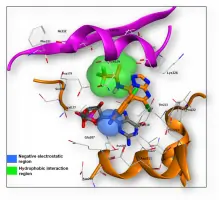
Our laboratory specializes in designing small molecule compounds for therapeutic applications. We focus on creating research tools and drug candidates targeting neurodegenerative diseases and parasitic infections. Our approach combines computational modeling with experimental validation to develop novel chemical entities with optimized pharmacological properties.
Neurodegenerative Disease Research
We conduct comprehensive research on neurodegenerative tauopathies through collaborations with the University of Pennsylvania's Center for Neurodegenerative Diseases Research. Our work includes developing microtubule-stabilizing agents for Alzheimer's disease treatment and investigating fundamental disease mechanisms to identify new therapeutic targets.
Parasitic Infection Treatment
Our laboratory develops novel therapeutic approaches for parasitic infections through collaboration with UCSD's Center for Discovery and Innovation in Parasitic Diseases. We focus on identifying and optimizing small molecule inhibitors targeting essential pathways in parasitic organisms while maintaining host selectivity.
Isosteric Replacement Development
We investigate fundamental principles in medicinal chemistry through systematic studies of isosteric replacements. Our research aims to expand the chemical toolbox available for drug design by characterizing bioisosteric relationships that maintain or enhance biological activity while improving drug-like properties.
Multi-Target Inhibitor Research
Our team develops multi-targeted therapeutic agents that simultaneously modulate multiple disease-related pathways. This approach is particularly valuable for complex conditions like Alzheimer's disease, where targeting multiple pathological mechanisms may yield superior clinical outcomes compared to single-target therapies.
People
Carlo Ballatore
Principal Investigator
Dr. Ballatore leads our laboratory's research in medicinal chemistry with expertise in neurodegenerative disease drug design. He has published extensively on microtubule-stabilizing agents and tau aggregation inhibitors while maintaining active collaborations with leading research institutions.
Questions
What research areas does your laboratory focus on?
We focus on small molecule drug design for neurodegenerative diseases and parasitic infections, with specialized expertise in tau aggregation inhibition and isosteric replacement strategies.
Do you collaborate with other research institutions?
Yes, we maintain active collaborations with the University of Pennsylvania's Center for Neurodegenerative Diseases Research and UCSD's Center for Discovery and Innovation in Parasitic Diseases.
What types of therapeutic compounds do you develop?
Our laboratory develops small molecule compounds including microtubule-stabilizing agents, tau aggregation inhibitors, and multi-targeted therapeutics for complex disease treatment.
Are you accepting graduate students?
Students admitted to UCSD's Biomedical Sciences or Chemistry and Biochemistry programs may apply for rotation opportunities in our laboratory.
What recent breakthroughs have your lab achieved?
Our team has developed novel triazolopyrimidine compounds showing promise for Alzheimer's treatment and advanced understanding of isosteric replacement principles in medicinal chemistry.