
Business Details
37 Years
experience
Environmental Services for Fisheries & Natural Resources
Cramer Fish Sciences has dedicated over three decades to addressing fisheries and natural resource challenges through rigorous scientific research and practical solutions. Our interdisciplinary team combines senior scientists with emerging experts, leveraging expertise in genetics, aquatic ecology, and habitat restoration to deliver actionable insights. We prioritize peer-reviewed research, university collaborations, and transparent methodologies to support policy decisions and advance sustainable resource management.With offices across the Pacific Northwest and California, our localized teams provide tailored solutions while maintaining national standards of excellence. Our commitment to innovation is evidenced by our development of environmental DNA (eDNA) techniques and patented methodologies for species monitoring, ensuring clients receive cutting-edge, reliable data-driven strategies.

Services
Fisheries Research
Genetic Analysis
Habitat Restoration
Environmental DNA Monitoring
Population Modeling
Details
- Year established: 1989
Highlights and features
- We have 30+ years of experience in fisheries and aquatic ecology research.
- Our team includes senior scientists with published expertise in genetic analysis.
- We develop patented eDNA techniques for species detection and monitoring.
- We maintain interdisciplinary field and lab teams for comprehensive project execution.
- We prioritize peer-reviewed research and transparent, data-driven methodologies.
Services
Fisheries Research
We conduct comprehensive fisheries research focusing on population dynamics, habitat use, and ecosystem interactions. Our scientists employ advanced tagging, telemetry, and statistical modeling to assess fish populations. This service supports sustainable management through data-driven insights for species conservation and regulatory compliance.
Genetic Analysis
Our genetic analysis services use molecular techniques to evaluate species diversity, population structure, and parentage. We apply cutting-edge tools like eDNA and microsatellite markers for accurate species identification. This service aids in conservation planning and monitoring of endangered aquatic species.
Habitat Restoration
We design and implement habitat restoration projects to improve aquatic ecosystems. Our approach includes geomorphic assessments, riparian planting, and flow management to enhance fish habitats. This service balances ecological needs with stakeholder objectives for long-term success.
Environmental DNA Monitoring
We utilize environmental DNA (eDNA) technology to detect aquatic species presence through water samples. This non-invasive method provides rapid, cost-effective monitoring for rare or invasive species. Our protocols ensure high accuracy for regulatory and conservation applications.
Population Modeling
Our population modeling service uses statistical and simulation tools to predict species dynamics under various management scenarios. We integrate field data with computational models to assess extinction risks and recovery strategies. This service supports evidence-based decision-making for resource managers.
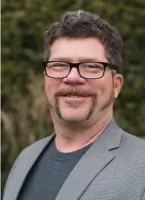
People
Gregg Schumer
Vice President, Director of Lab Services, Senior Molecular Biologist
Gregg Schumer leads molecular biology initiatives at Cramer Fish Sciences, specializing in eDNA techniques for aquatic species detection. With 20+ years of experience, he has published extensively on genetic tools for fisheries management and invasive species monitoring.
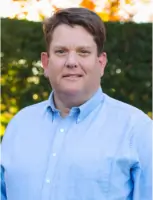
Joseph E. Merz
President, Principal Scientist
Dr. Joseph Merz directs fisheries ecology research with 26+ years of experience in habitat restoration and salmonid conservation. He has authored over 50 peer-reviewed publications and specializes in habitat assessment and flow management impacts on fish populations.
Philip Roni
Vice President, Principal Scientist
Dr. Philip Roni focuses on watershed restoration and salmon habitat evaluation. With 30 years of experience, he has published a seminal textbook on stream restoration and led numerous studies on floodplain rehabilitation and fish passage improvements.
Scott Blankenship
Senior Geneticist
Dr. Scott Blankenship specializes in population genetics and conservation biology. He has developed standardized genetic monitoring protocols for salmonids and contributed to species reintroduction programs. His work bridges molecular biology with field ecology for practical management solutions.
Steven Zeug
Principal Scientist
Dr. Steven Zeug leads interdisciplinary research on predator-prey dynamics and river restoration. With expertise in population modeling, he has directed large-scale studies on Chinook salmon habitat use and invasive species impacts in aquatic ecosystems.
Questions
What geographic areas does Cramer Fish Sciences serve?
We operate across the Pacific Northwest and California, including Oregon, Washington, Idaho, Montana, and Alaska, with a focus on West Coast fisheries and aquatic ecosystems.
What scientific methods does Cramer Fish Sciences use?
We employ genetic analysis, environmental DNA (eDNA) monitoring, telemetry, population modeling, and habitat assessments to address fisheries and natural resource challenges.
How does Cramer Fish Sciences ensure data accuracy?
We use peer-reviewed methodologies, standardized protocols, and cross-validated techniques like eDNA sampling combined with traditional field surveys for reliable, actionable results.
What types of clients work with Cramer Fish Sciences?
We collaborate with government agencies, tribal organizations, utilities, and conservation groups seeking science-based solutions for fisheries management and habitat restoration.
Does Cramer Fish Sciences publish research findings?
Yes, our scientists regularly publish in peer-reviewed journals and contribute to academic courses, ensuring our work advances both scientific knowledge and practical applications.