
Business Details
50+ Years
experience
Innovative Engineering Solutions for National Security & Space Exploration
Johns Hopkins Applied Physics Lab is a not-for-profit university-affiliated research center dedicated to solving complex challenges in national security and space exploration. Since our founding in 1942, we have combined technical expertise with a culture of innovation to deliver reliable solutions for government sponsors. Our multidisciplinary teams specialize in systems engineering, advanced research, and analytical problem-solving across domains including cybersecurity, artificial intelligence, and space science.We maintain independent research programs to address future priorities while adhering to core values of integrity and excellence. With over 8,800 staff members, 80% of whom are technical professionals, we provide dedicated engineering and scientific support through 13 mission areas organized to meet specific sponsor needs. Our campus in Laurel, Maryland spans 461 acres with 20+ major facilities, enabling us to tackle challenges from ocean depths to interstellar space.

Services
Air and Missile Defense
Artificial Intelligence
Cybersecurity
Space Science
Quantum Technologies
Health
Hypersonics
Next-Generation Materials
ISR Technology
Operational Resilience
Details
- Year established: 1942
Highlights and features
- We offer over 80 years of experience in advanced research and engineering.
- Our team includes leading experts in AI, cybersecurity, and space science.
- We maintain independent R&D programs to address future national priorities.
- Our solutions impact national security and space exploration missions.
- We combine creativity with technical expertise to solve complex problems.
Services
Space Science and Engineering
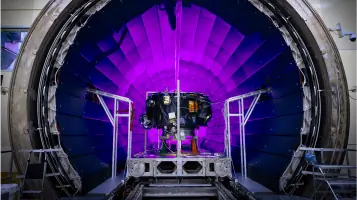
We design and execute space missions to advance scientific understanding and national security. Our work includes planetary defense systems, interstellar mapping, and satellite technologies. Clients benefit from our expertise in spacecraft development and space weather analysis.
Artificial Intelligence
Our AI capabilities enhance national security through advanced analytics and decision-support systems. We develop machine learning algorithms for threat detection, wargaming simulations, and autonomous systems to improve mission outcomes.
Cybersecurity
We protect critical infrastructure with cutting-edge cybersecurity frameworks and threat analysis. Our solutions include standardized alert systems and resilience strategies to defend against evolving cyber threats to national security.
Air and Missile Defense
We develop advanced defense systems to counter airborne threats through precision strike technologies and sensor networks. Our work ensures operational readiness against evolving missile technologies and delivery systems.
Quantum Technologies
We pioneer quantum computing and communication systems to maintain technological superiority. Our research addresses encryption challenges and enables secure information processing for future defense applications.
People
Steven Storck
Chief Scientist, Additive Manufacturing
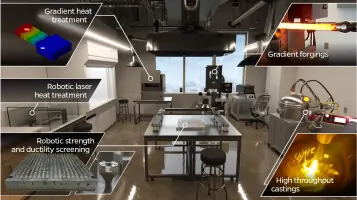
Steven leads additive manufacturing research, applying cross-domain technologies to improve missile defense systems and industrial production processes.
Questions
What services does Johns Hopkins APL provide?
We specialize in air and missile defense, space science, cybersecurity, AI, and quantum technologies to address national security and space exploration challenges.
How can my organization collaborate with APL?
We partner through government contracts, cooperative agreements, and technology transfer programs to develop solutions for critical national challenges.
Does APL offer career opportunities?
Yes, we hire technical professionals in engineering, science, and analysis roles with opportunities for professional development and innovation.
Where is APL located?
Our main campus spans 461 acres in Laurel, Maryland, with additional facilities supporting specialized research needs.
What research areas does APL focus on?
We focus on 13 mission areas including space exploration, hypersonics, health technologies, and operational resilience for national security.
Videos